
Dublin Analytical Applications
What is four-quadrant control and why it matters for electrochemistry
In Summary
Four-quadrant control means an instrument can output positive or negative voltage and both source and sink current, operating in all four quadrants of the I–V plane. In electrochemistry, this enables safe, accurate charge–discharge, battery simulation, fuel-cell stack work and advanced techniques like EIS on low-impedance energy devices, because the hardware can seamlessly move between supply and load behaviour.
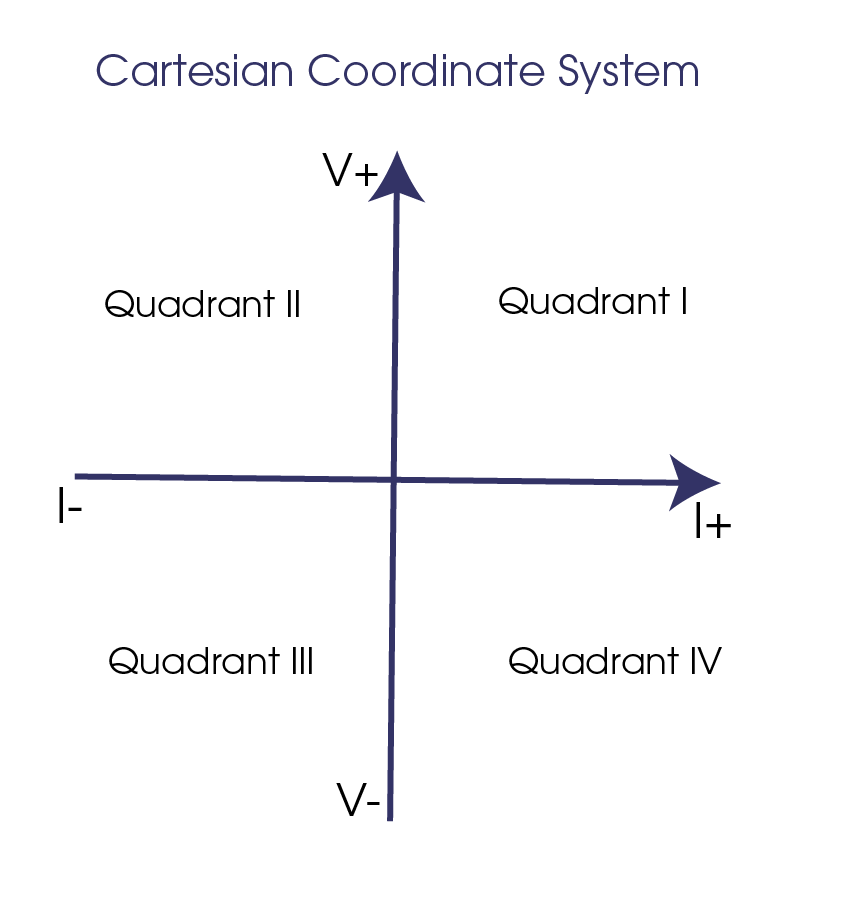
What does 'Four Quadrants' actually mean?
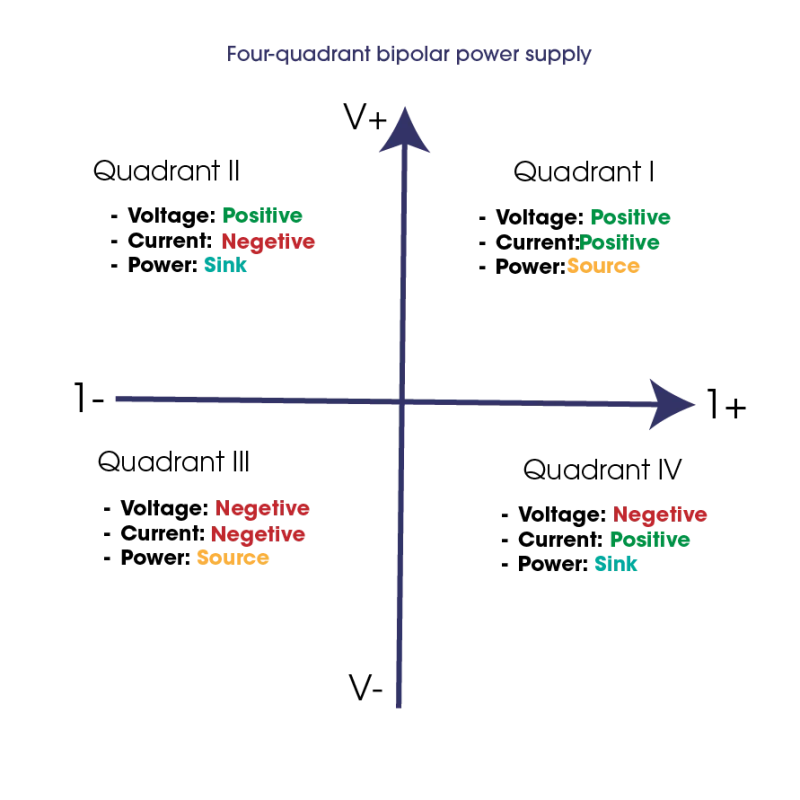
In power and measurement, the voltage–current plane is divided into four quadrants.
- Quadrant I: +V, +I, the instrument is sourcing power
- Quadrant II: +V, −I, the instrument is sinking power
- Quadrant III: −V, −I, sourcing at negative polarity
- Quadrant IV: −V, +I, sinking at negative polarity
A four-quadrant or bipolar supply can operate in all four, switching smoothly between source and sink. That is why source measurement units (SMUs) and bidirectional supplies can both charge and discharge a device under test without rewiring.
Where Potentiostats Fit
A potentiostat controls the working electrode potential versus a reference electrode and measures current via a counter electrode. For energy devices and low-impedance cells, pairing a research-grade potentiostat with a four-quadrant source/sink extends the safe operating envelope, improves control around 0 V crossing, and prevents artefacts when current reverses.
How four-quadrant controls work in practice
Four-quadrant power stages use bidirectional topologies that allow current to flow both into and out of the instrument. This lets the hardware act as a precise power source or an electronic load, handling regenerative energy during discharge and rapidly stabilising around zero. The benefit is clean transitions and accurate set-points when you cross between charge and discharge, which is common in battery, supercapacitor and stack testing.
Key behaviours to look for;
- Seamless source–sink crossover to avoid glitches when current reverses
- Programmable limits for voltage, current and power in all four quadrants
- Tight control near 0 V for polarity reversals and AC perturbations during EIS
- Regenerative sink where absorbed energy is returned to the mains to cut heat and cost (useful in high-power labs)
Why it Matters for Electrochemistry
1) Battery and supercapacitor testing
Charging demands sourcing; discharging demands sinking. Four-quadrant control lets you cycle cells, modules and packs with precise current profiles and rapid polarity changes, and it supports battery simulation of downstream loads. This is essential for realistic drive-cycle work and module-level validation.
2) Fuel cell and electrolyser work
Stacks often require both positive and negative polarities and careful management of half-cell potentials. A four-quadrant setup stabilises transitions, supports load emulation, and works cleanly with dual-electrometer measurements for half-cell diagnostics.
3) High-fidelity EIS on low-impedance devices
Electrochemical impedance spectroscopy relies on small AC perturbations over a DC bias. With low impedances, any source–sink discontinuity can distort the spectrum. Four-quadrant hardware improves control around the bias point, supports stable perturbations and helps deliver reliable micro-ohm-level measurements used for state of health modelling.
Typical Electrochemical Use Cases

• Cell formation and characterisation
Handles fast charge, rest and pulse-discharge switchovers with stable control.
• Module and pack EIS
Supports AC perturbations on high DC while safely absorbing returned energy.
• Fuel-cell stack diagnostics
Allows half-cell monitoring and dynamic load changes for clearer insights.
• Supercapacitor ESR tests
Enables clean polarity reversals and quick control for accurate low-impedance measurements.
Choosing instruments: what to check

Control and safety
- Source–sink crossover response and stability near 0 V
- Programmable compliance and trip limits in every quadrant
- Regenerative sinking to reduce heat load in the lab
Measurement fidelity
- Compatible potentiostat bandwidth and EIS frequency range
- Dual electrometer capability for stack and half-cell work
- Low-noise cabling, shielding and proper three-electrode configuration for accurate control and measurement
How this Maps to Dublin Analytical Solutions?
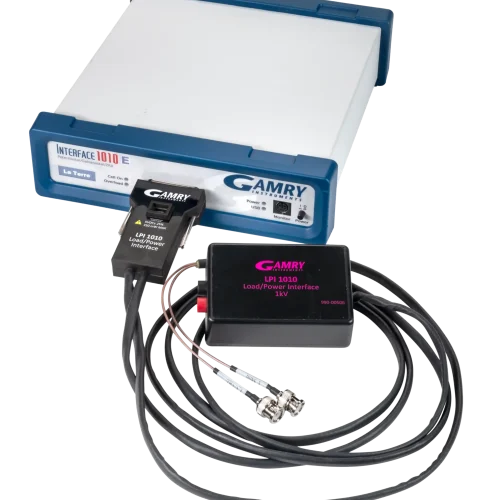
LPI1010
For high-voltage EIS and large energy devices, see our page on high-voltage EIS for battery modules and packs with the LPI1010. This solution pairs EIS capability with external loads and bipolar supplies up to pack level:
Reference 3000
For high-current cell and materials R&D, take a look at the Reference 3000, which delivers high-bandwidth EIS up to 1 MHz and can be equipped with optional 30 A boosters to support demanding battery, electrode and materials characterisation workflows:
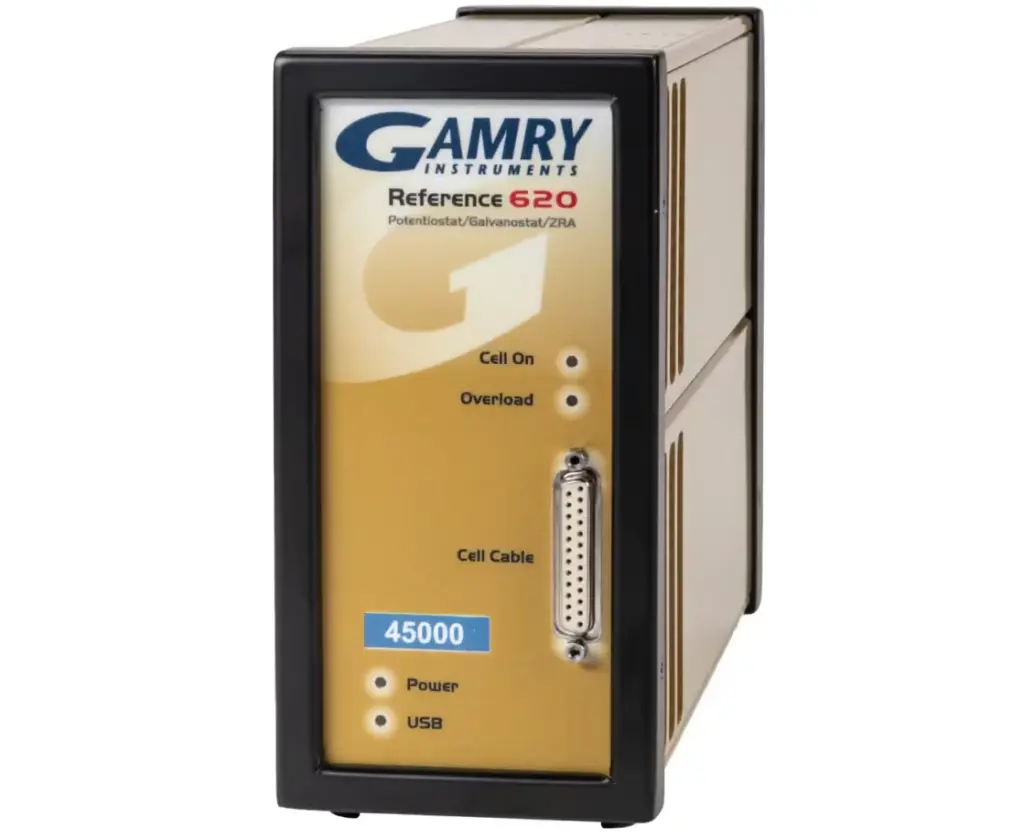
Reference 6200
For low-current sensors and coatings where picoamp resolution matters, see Reference 620:
Interface 5000E Potentiostat
For half-cell stack monitoring and cell-level energy-device studies, explore the Interface 5000E, which features a dual electrometer for simultaneous half-cell measurements and improved diagnostic insight across complex electrochemical systems:
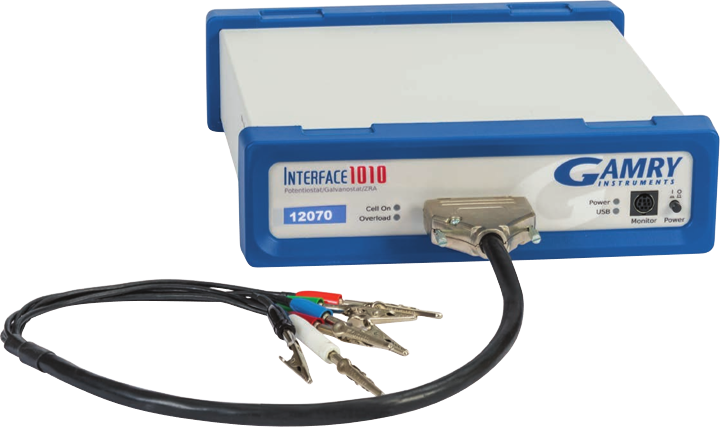
Interface 1010E
For general lab workflows and multichannel setups, see Interface 1010E:
View our electrochemistry potentiostats:
Implementation Tips For Your Lab
Wiring and grounding
Use short, twisted leads, star-ground where possible, and keep sense lines away from high-current conductors. Proper three-electrode wiring improves control accuracy and reduces artefacts.
Source–sink transitions
Verify the instrument’s crossover response in your anticipated current range, especially if you plan to run dynamic profiles or AC perturbations on top of DC.
Thermal and energy management
For high-power cycling, regenerative sink reduces heat, HVAC load and running costs by returning energy to the grid rather than releasing it as heat.
What to Do Next?
If you need an application note or help selecting the right combination of potentiostat and four-quadrant source/sink for your cell, module or stack, talk to Dublin Analytical. Our applications team supports everything from low-current sensors to high-power EIS on battery packs.
Page FAQ's
Two-quadrant supplies operate with one polarity of voltage but can source and sink current. Four-quadrant supplies add the second polarity of voltage, so they can handle any combination of +/−V and +/−I for full source–sink control.
Not for every cell. It becomes increasingly valuable for low-impedance devices, high power levels, or when your bias and perturbation cross 0 V, because the instrument must stabilise through source–sink crossover without distorting the spectrum.
Yes. Regenerative systems return absorbed energy to the grid instead of turning it into heat, which reduces instrument and HVAC burden in high-power cycling
Match the current range, EIS bandwidth and sensitivity to your application: low-current sensors and coatings lean to Reference 620, high-current materials work to Reference 3000, half-cell stack diagnostics to Interface 5000E, and general multichannel lab work to Interface 1010E. See the product links above for specifics.
Contact Us Today
We take great pleasure in assisting you and ensuring you get a prompt response to your questions
Live chat opening hours Mon – Fri 9:15 to 16:30 (UK Time)