
SciMed Education
In-situ Dynamic Light Scattering in Syringes: Measuring Nanoparticles and Proteins Accurately
Summary
Using Cordouan Technologies’ VASCO Kin dynamic light scattering (DLS) system equipped with an in-situ optical fibre probe enables contactless size measurements of nanoparticles and proteins directly inside commercial syringes. This approach provides particle size results comparable to those obtained using conventional quartz cuvettes, allowing manufacturers to analyse formulations in their original sealed containers without the need for sample transfer or handling.
What is dynamic light scattering and why is it used for nanoparticle and protein measurement?
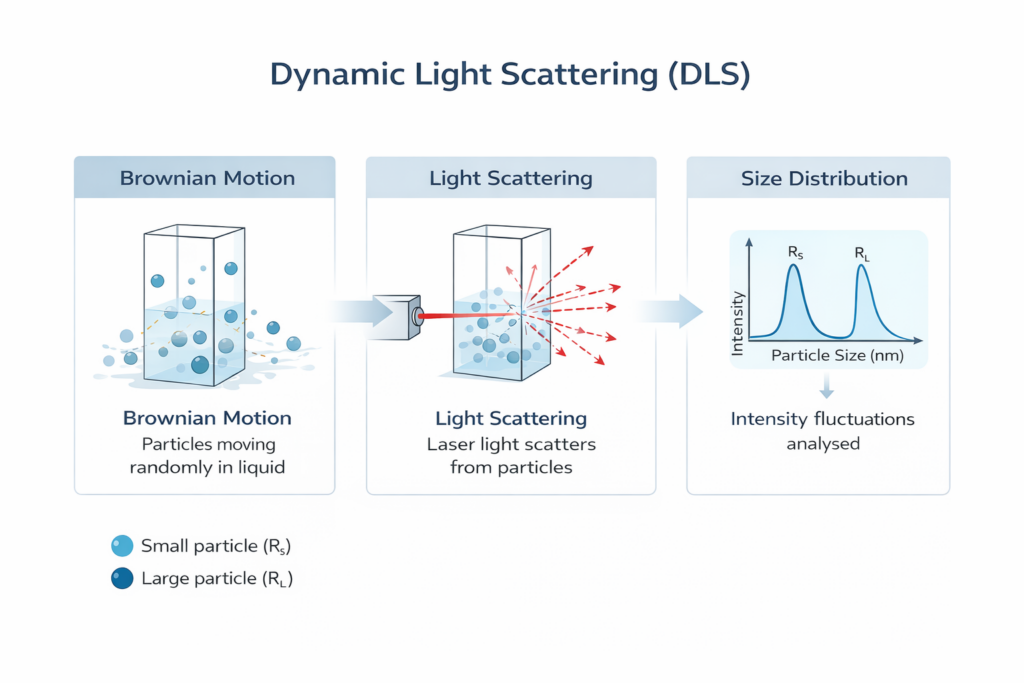
Dynamic light scattering is a widely used technique for characterising the size of nanoparticles and macromolecules dispersed in liquids. By analysing fluctuations in scattered light caused by the Brownian motion of particles, DLS can determine particle sizes ranging from approximately 1 nm up to several micrometres. Because the technique is fast, reliable and relatively simple to operate, it has become an essential analytical tool in both research and industrial laboratories when working with colloidal suspensions, nanoparticle dispersions and protein formulations.
Why measure particle sizes directly inside syringes instead of using conventional cuvettes?
Most commercial DLS instruments require users to transfer the sample into a cuvette before measurement. This batching process can expose sensitive pharmaceutical formulations to air, surfaces and handling steps, which may introduce contamination or cause degradation, denaturation or aggregation of biological molecules.
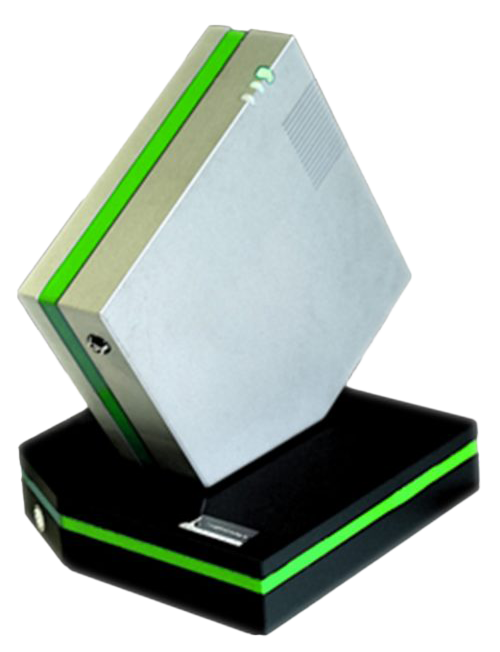
To address this challenge, Cordouan Technologies developed a remote optical probe for the VASCO Kin DLS system that allows measurements to be performed directly within the syringe. The in-situ probe enables contactless particle size analysis inside sealed containers, allowing manufacturers and researchers to monitor the stability of injectable drugs, vaccines and biopharmaceutical formulations without opening the packaging
What types of syringes and reference samples were tested?
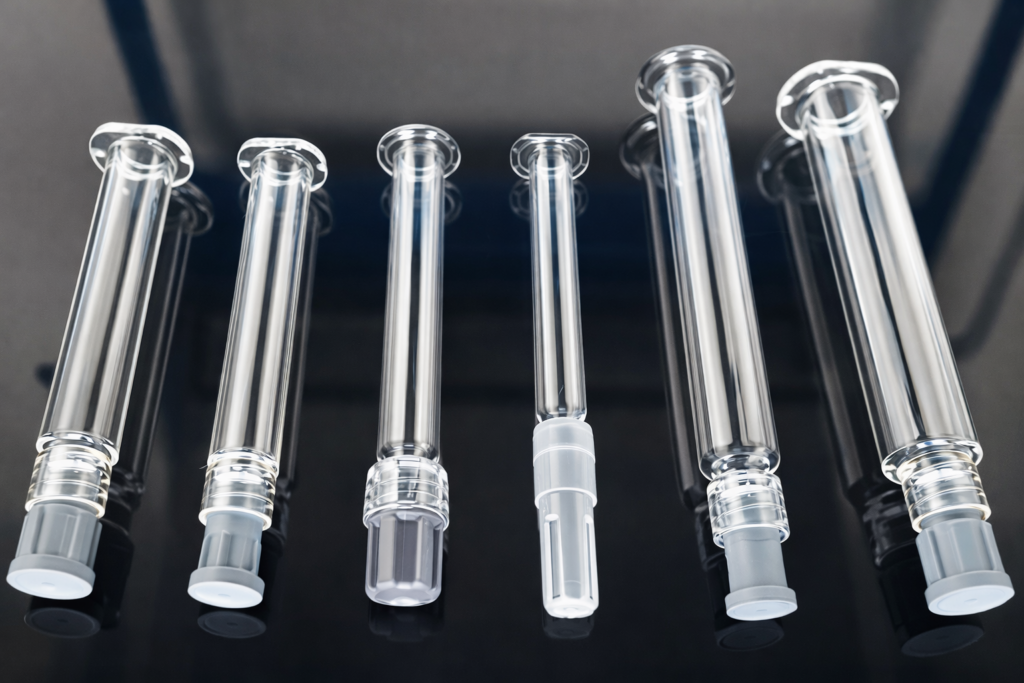
The study evaluated six different commercial syringe formats. These included three glass syringes with capacities of 0.5 mL, 1 mL and 3 mL, as well as three cyclo-olefin polymer (COP) syringes with capacities of 0.5 mL, 1 mL and 5 mL.
Two reference materials were used to assess measurement accuracy. The first was a standard polystyrene latex suspension containing particles with a certified average diameter of approximately 40 nm. When analysed in a conventional quartz cuvette using DLS, the suspension produced a Z-average particle size of approximately 41.7 nm with a low polydispersity index (PDI), indicating a narrow particle size distribution.
The second reference material was bovine serum albumin (BSA), a protein commonly used as a size standard in biopharmaceutical research. The BSA solution was prepared at a concentration of 5 mg/mL in buffer. Measurements performed in a quartz cuvette produced a Z-average diameter of approximately 8.5 nm with a PDI of 0.133. Further analysis revealed a dominant monomer population with a characteristic diameter of around 6.1 nm.
How were the in-situ Dynamic Light scattering (DLS) measurements performed using the VASCO Kin?
For the in-situ measurements, syringes were partially filled with either the polystyrene latex suspension or the BSA protein solution. Each syringe was held vertically using a dedicated stand to maintain a stable position during measurement.
The VASCO Kin in-situ optical head was aligned so that the incident laser beam passed through the centre of the syringe and the sample volume. The system uses a laser with a wavelength of 633 nm, while scattered light is collected at a detection angle of 170 degrees.
Each measurement was performed with an acquisition time of approximately one minute. The standard cumulants algorithm was used to determine the Z-average particle size and polydispersity index, while a Sparse Bayesian Learning (SBL) algorithm was applied to obtain more precise estimates of the hydrodynamic diameter of the BSA monomer population.
What did the results show Dynamic Light scattering (DLS) about measurements in glass versus polymer syringes?
The measurements performed directly in glass syringes produced particle size values that were very close to those obtained using the conventional quartz cuvette. For the 40 nm latex sample, Z-average particle sizes measured in glass syringes ranged from approximately 41.3 nm to 41.7 nm. For the BSA sample, the Z-average values ranged from approximately 8.4 nm to 8.8 nm. The BSA monomer peak remained consistently measured at around 6.1 nm.
Measurements performed in cyclo-olefin polymer syringes also produced highly comparable results. For the latex suspension, Z-average values ranged between approximately 41.8 nm and 42.0 nm. The BSA monomer peak was measured at approximately 6.4 nm.
Although slightly larger values were observed in polymer syringes, the deviations remained small and within a few percent of the reference measurements obtained in quartz cuvettes, demonstrating the reliability of the in-situ measurement approach.
These measurements were performed using the VASCO Kin dynamic light scattering system, which enables contactless in-situ particle size analysis directly within sealed containers.
Why do polymer syringes show slightly larger particle sizes using the Vasco KIN Dynamic Light scattering (DLS) method?
The small increase in measured particle size observed in polymer syringes is attributed to the optical properties of the syringe material. Polymer walls tend to scatter more incident light than glass, which slightly increases the background intensity detected by the instrument. This additional scattering can shift the measured particle size marginally upward.
However, even for small proteins such as bovine serum albumin, the effect remains minimal and predictable, typically resulting in a difference of only a few percent compared with measurements performed in glass containers.
What does this study conclude about the capability of the VASCO Kin to measure Dynamic Light scattering (DLS) in-situ for biopharmaceutical applications?
The results demonstrate that the VASCO Kin dynamic light scattering system equipped with an in-situ optical head can accurately measure nanoparticle and protein sizes directly within both glass and polymer syringes. The measured particle sizes differed by less than approximately 0.6 nm from those obtained using conventional quartz cuvettes, and the polydispersity values remained consistent.
This capability allows particle size measurements to be performed without opening or altering the sealed container. As a result, manufacturers and researchers can analyse injectable active pharmaceutical ingredients, vaccines and other biopharmaceutical products without introducing contamination risks or altering the sample.
The technology therefore offers a valuable tool for real-time quality control and stability monitoring of injectable formulations during development, production and storage.
What to do next?
For more information about in situ nanoparticle measurement using dynamic light scattering, explore the VASCO Kin system or speak with a SciMed product manager.
Page FAQ's
Measurements performed directly in syringes show excellent agreement with traditional cuvette measurements, with particle size deviations typically less than one nanometre.
Any nanoparticle or macromolecule suspension that is compatible with dynamic light scattering can be analysed. This includes nanoparticle dispersions, protein formulations and other biopharmaceutical samples.
Contactless measurement eliminates the need for sample transfer and reduces the risk of contamination, degradation or aggregation. This is particularly important for sensitive pharmaceutical formulations and injectable products.
Polymer syringe walls scatter more light than glass, which slightly increases the background signal detected by the instrument and can shift measured particle sizes by a small amount.
Contact Us Today
We take great pleasure in assisting you and ensuring you get a prompt response to your questions
Live chat opening hours Mon – Fri 9:15 to 16:30 (UK Time)