
SciMed Education
What are the benefits of High-Resolution ICP-OES for Accurate Elemental Analysis?
Summary
High resolution ICP OES is an advanced elemental analysis technique that uses argon plasma to excite atoms and measure their emitted light, allowing accurate multi element detection from very low concentrations to high percentage levels. It provides significantly lower detection limits, interference free measurements, and a wider working range compared to standard ICP OES, making it ideal for complex samples such as food, environmental, and industrial materials.
What Is ICP-OES (Inductively Coupled Plasma Optical Emission Spectroscopy)?
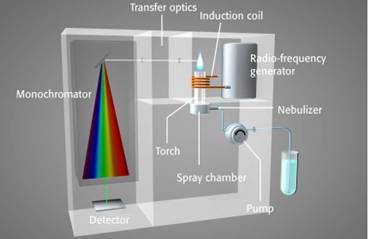
ICP-OES, or Inductively Coupled Plasma Optical Emission Spectroscopy (ICP-OES), is an analytical technique used to measure elemental composition. It operates by using a high-temperature argon plasma to excite atoms and ions, causing them to emit light at specific wavelengths characteristic of each element.
Samples are introduced in a liquid state; they are typically aqueous but can also include organic liquids. ICP-OES measures up to 72 elements from parts per billion (ppb) to percentage level. ICP-OES is widely used in environmental analysis, materials science, and food safety due to its ability to analyse multiple elements with high sensitivity and accuracy in difficult matrices.
What are the benefits of High-Resolution ICP-OES?
High-resolution ICP-OES offers enhanced analytical performance compared to conventional ICP-OES, providing lower limits of detection and interference free measurements, particularly for complex samples with spectral interferences.
Key Features of the Analytik Jena PlasmaQuant 9200 HR ICP-OES
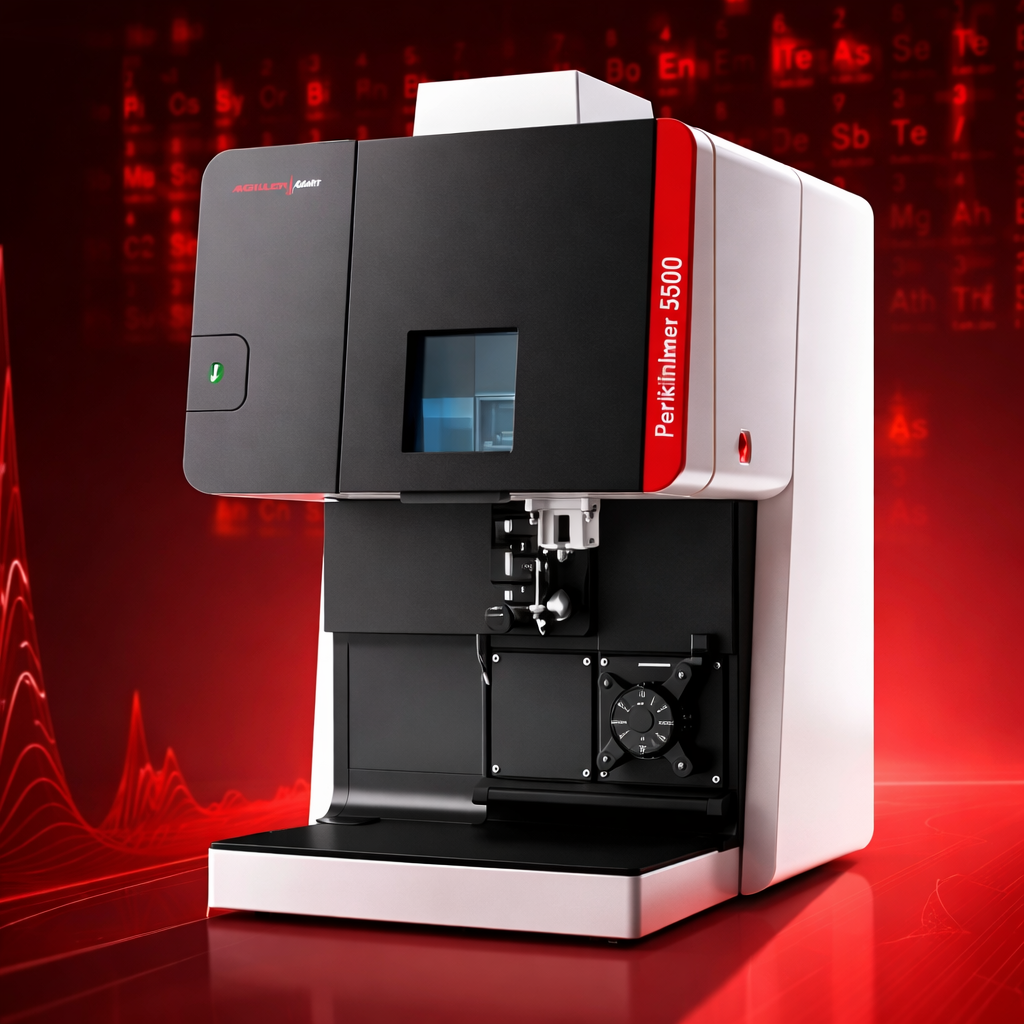
The PlasmaQuant 9200 is a high-resolution ICP-OES, delivering multiple advantages over standard ICP-OES instruments:
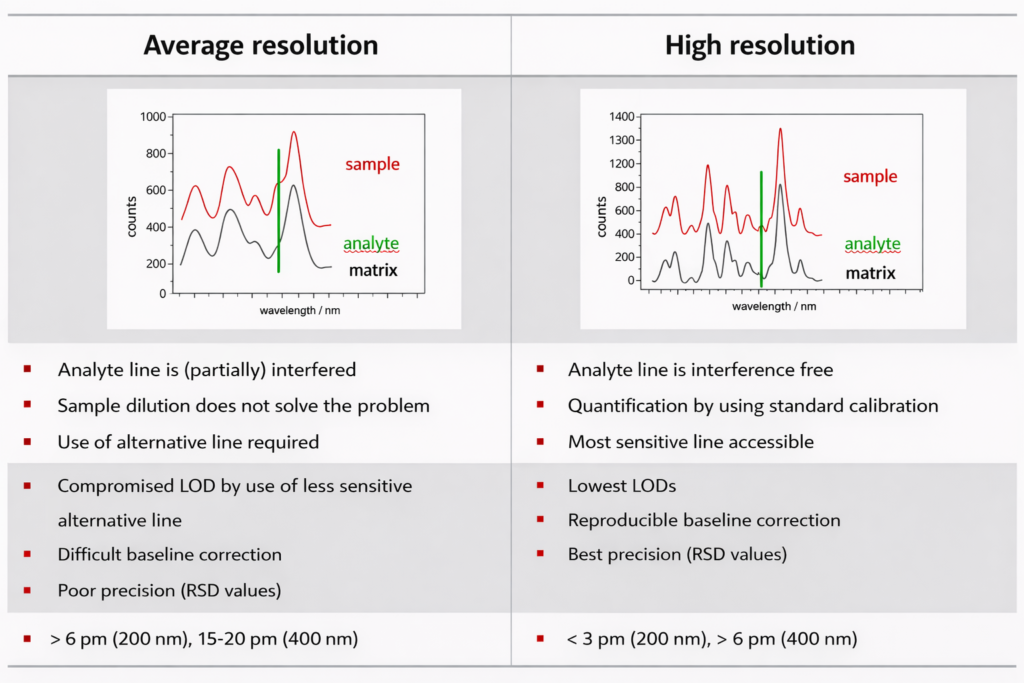
- High wavelength resolution of 2 pm at 200 nm, separating analyte lines from nearby interfering lines and enabling accurate elemental analysis without mathematical correction
- Advanced interference management using Automatic Baseline Correction (ABC) and Correction of Spectral Interferences (CSI)
- A robust plasma designed for high-matrix applications with lower energy and argon consumption (10 L/min)
Benefit 1: Lower limits of detection
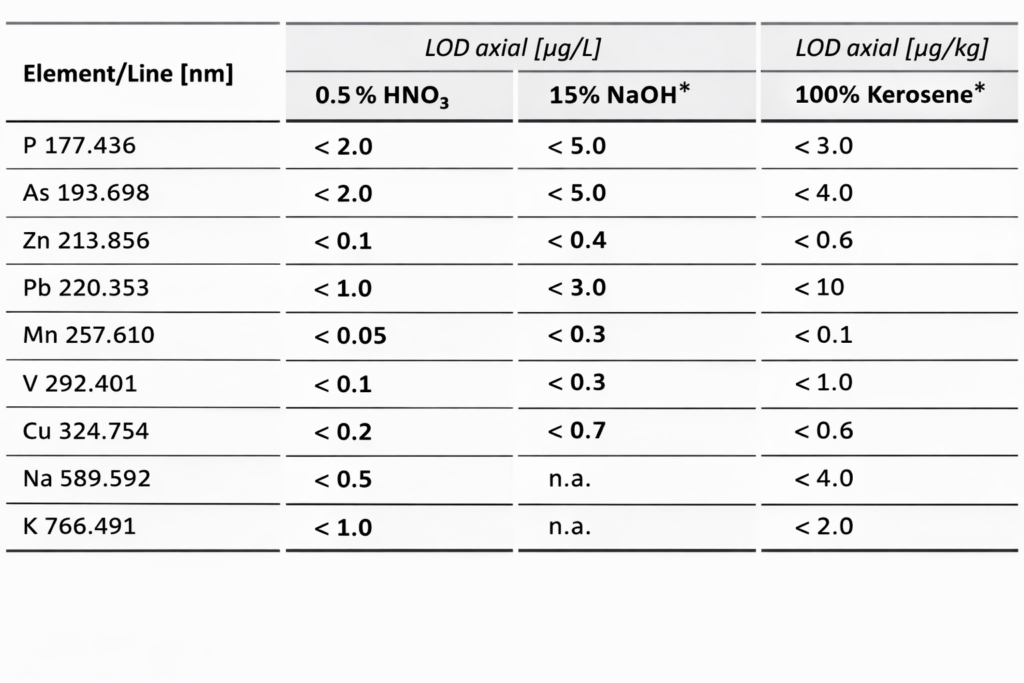
Limits of Detection of the Analytik Jena PlasmaQuant 9200
The PlasmaQuant 9200 provides extremely high elemental sensitivity, with limits of detection typically ten-times lower than those of standard ICP-OES. This enables the analysis of samples such as drinking water, wastewater, and food; that would otherwise require ICP-MS but with the high-matrix tolerance and lower cost benefits of ICP-OES.
Benefit 2: Interference free measurement
Wavelength Resolution of the Analytik Jena PlasmaQuant 9200
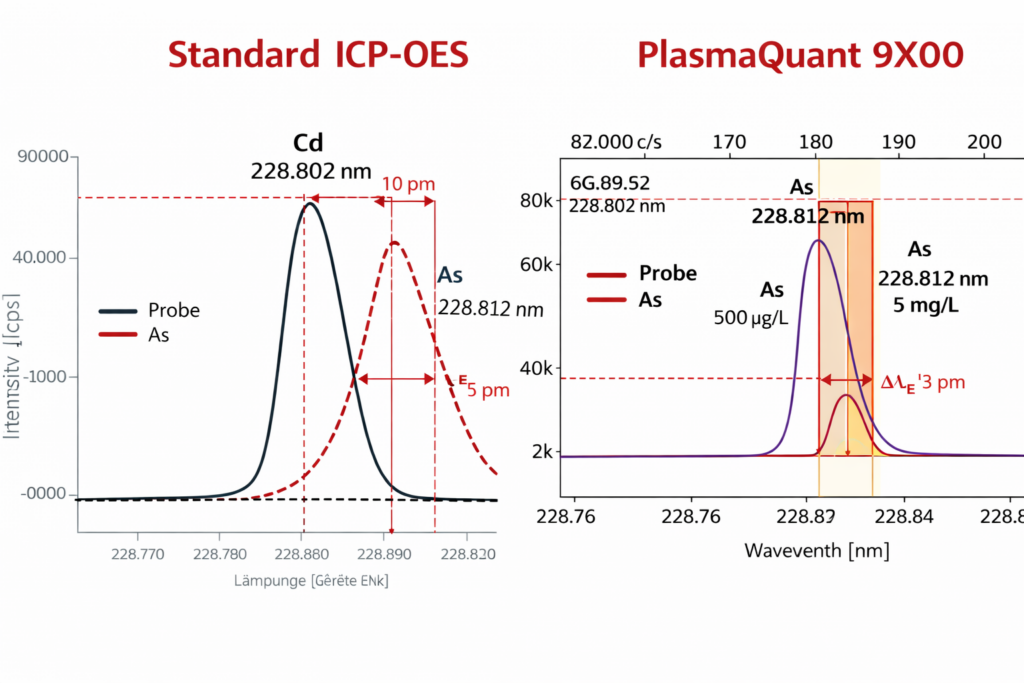
The Analytik Jena PlasmaQuant 9200 delivers unmatched wavelength resolution, revealing true analyte signals and removes spectral interferences. For example, cadmium can be fully resolved from the neighbouring arsenic peak, and vice versa. More typically, matrix interferences are removed from the analyte line in complex matrices such as battery materials and petrochemicals.
The PlasmaQuant 9200 gives you the correct result first time saving time and money, giving you total confidence in the quality and accuracy of your analysis.
Benefit 3: Extended working range
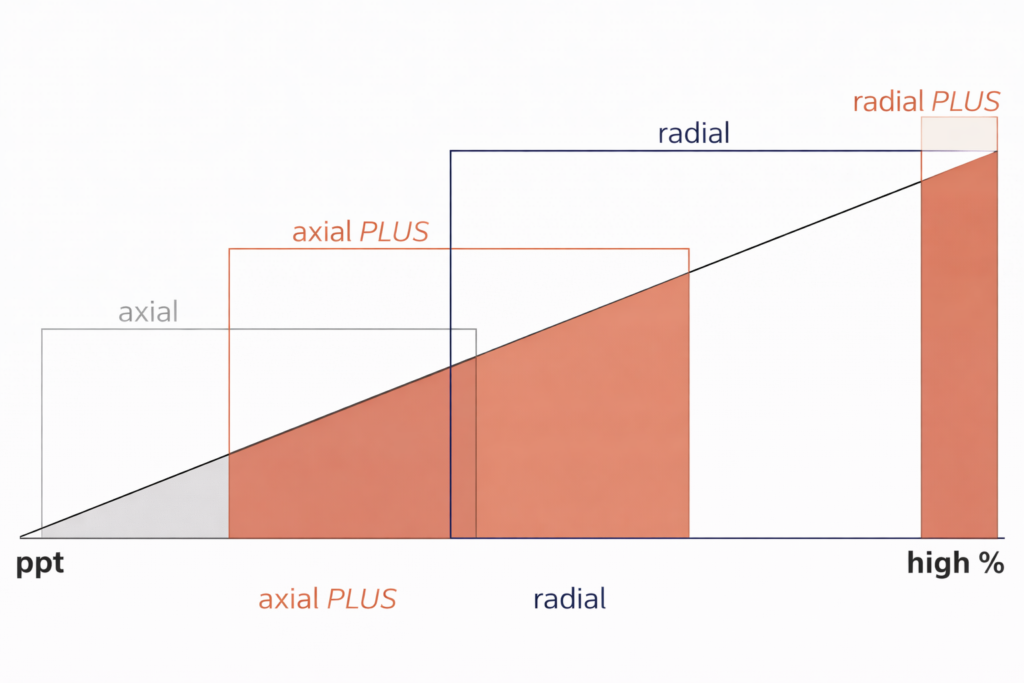
Calibration Range of the Analytik Jena PlasmaQuant 9200
The Analytik Jena PlasmaQuant 9200 offers four viewing ranges, enabling elemental measurements across six orders of magnitude, from sub ppb to percent concentration levels. This is achieved through the combination of radial and axial viewing of the plasma combined with attenuation of the emission intensity within the spectrometer.
PlasmaQuant 9200 saves time and money increasing throughput and reducing sample preparation.
Benefit 4: Simple analysis of Difficult Sample Matrices
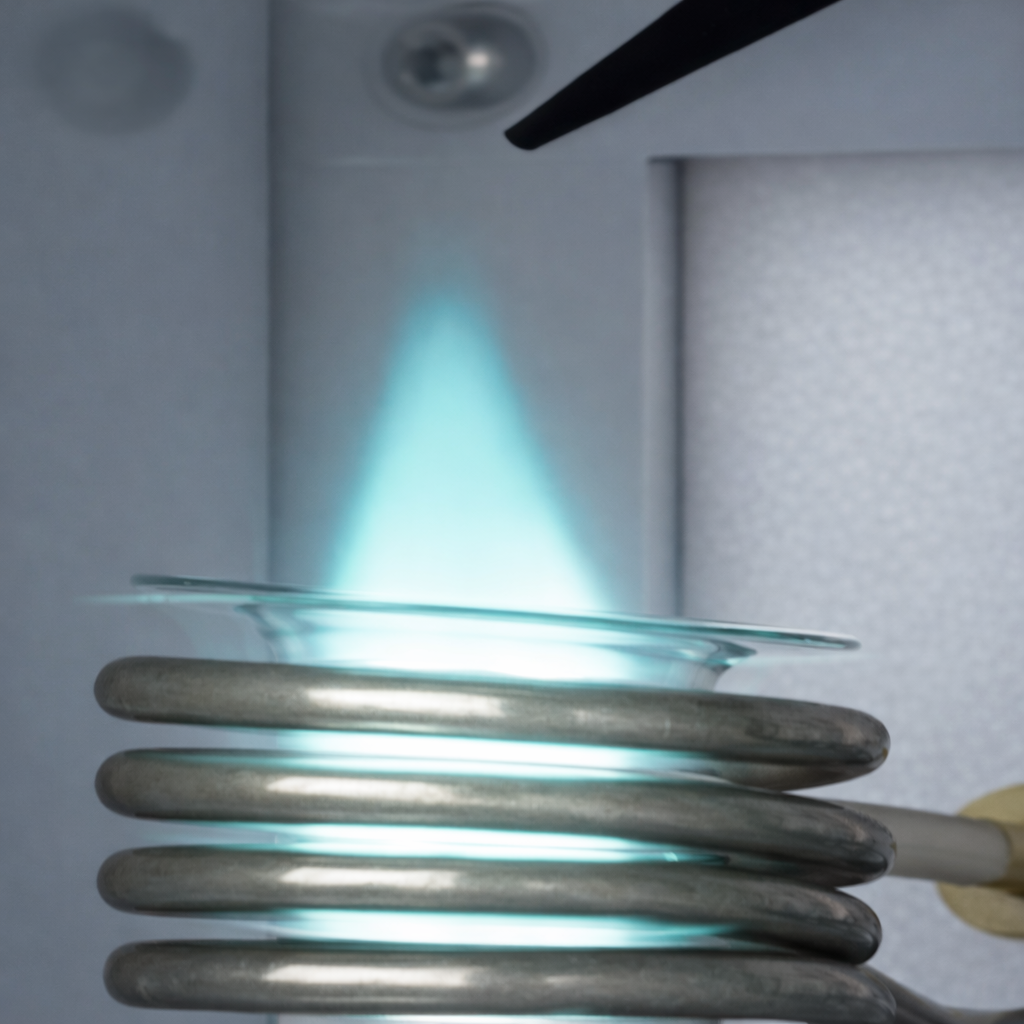
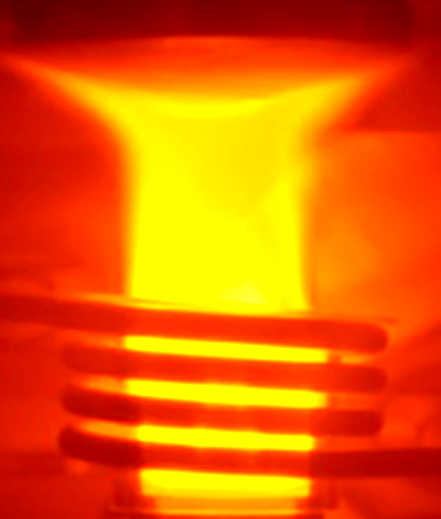
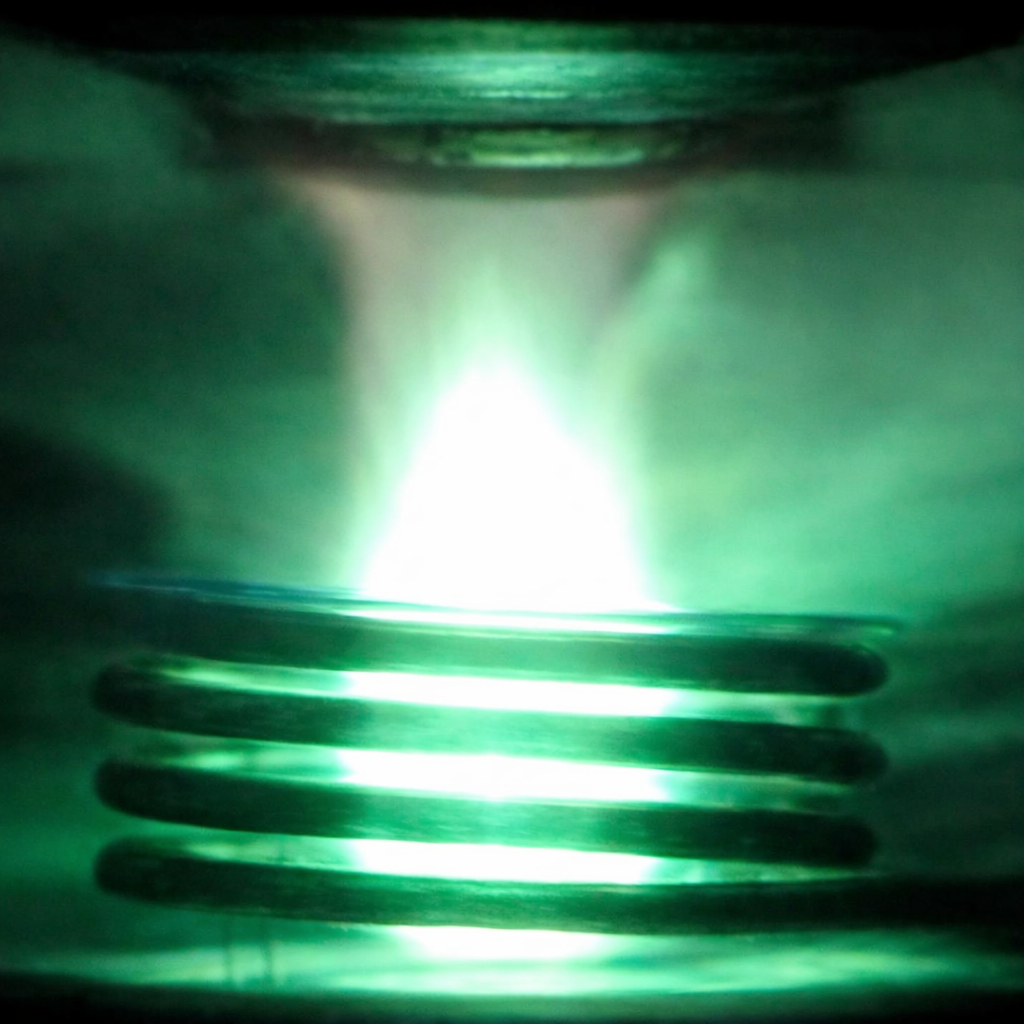
0.5% HNO3
15% NaCl
gasoline
The robust plasma (formed by the new solid state 27 MHz generator) combined with the V-shuttle vertical torch. This fully demountable torch enables the analysis of high salt content samples and the direct measurement of organic liquids.
This is achieved through the combination of radial and axial viewing of the plasma combined with attenuation of the emission intensity within the spectrometer.
What to do next?
For industry specific applications of high resolution ICP-OES, visit the link below:
Page FAQ's
High resolution ICP OES is used to accurately measure elemental concentrations in samples such as water, food, petrochemicals, and industrial materials, even at very low levels.
It offers much lower detection limits, higher wavelength resolution, and can separate analyte signals from interferences, improving accuracy and reliability.
It can measure elements across a very wide range, from sub parts per billion levels to percentage concentrations using axial and radial plasma viewing.
Yes, the robust plasma and advanced design allow direct analysis of difficult matrices such as high salt solutions and organic liquids with minimal preparation.
Contact Us Today
We take great pleasure in assisting you and ensuring you get a prompt response to your questions
Live chat opening hours Mon – Fri 9:15 to 16:30 (UK Time)